
Best Practices
Best Practices · 11. May 2026
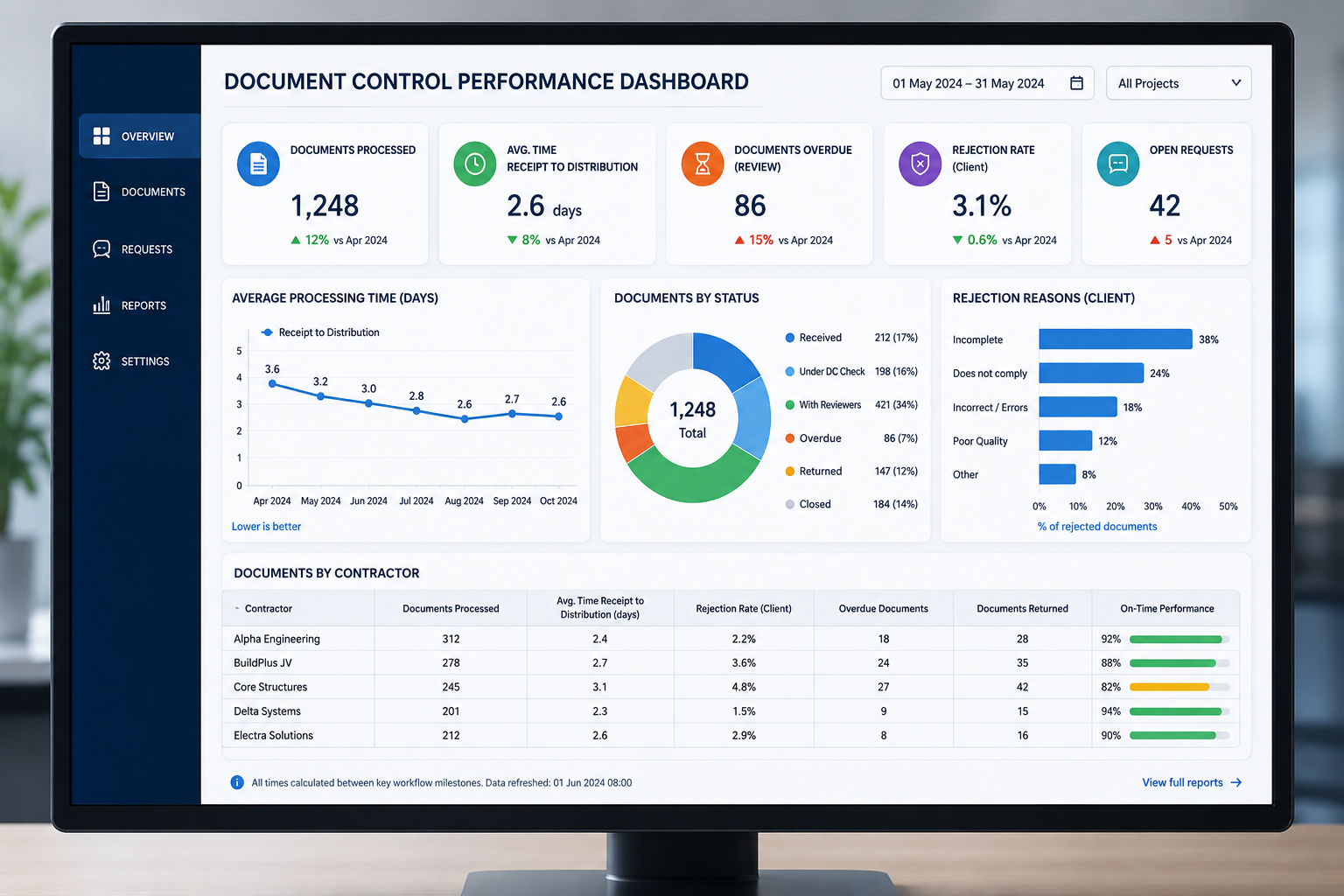
Learn how to track Document Control performance using KPIs, time stamps, registers, ticketing systems, automation, and reliable data.
Best Practices · 08. April 2026
When Document Control requests arrive all at once, reacting to the loudest demand is rarely the right approach. This article outlines a simple method to triage requests under pressure by checking impact, readiness, priority and next action, so that urgent work is handled with more clarity, consistency and control.
Best Practices · 06. March 2026
Controlled vs uncontrolled documents is not just terminology: it is a major source of rework, errors, and audit findings. This article explains the difference in plain language, the real risks of uncontrolled copies, and practical controls you can apply immediately (source of truth, revision visibility, controlled distribution, printing rules, and consistency).
Best Practices · 19. February 2026

Email overload is not only a productivity issue. In professional environments, a poorly managed inbox can create risks around traceability, missed instructions, and uncontrolled information flow. This article explains what Inbox Zero really means, why it matters beyond personal productivity, and how structured email discipline supports better communication practices and stronger Document Control environments.
Best Practices · 05. February 2026
Document Control ensures that documents can be trusted by enforcing controlled processes across their lifecycle. It supports accuracy, traceability, compliance, and risk reduction in environments where reliable, up-to-date information is critical.
Best Practices · 04. February 2026
Document Control reduces risk, improves efficiency, and ensures information can be trusted at every stage of its lifecycle. This article explains why organisations implement Document Control, the practical problems it solves, and the operational value it delivers in regulated and high-reliability environments.
Best Practices · 27. January 2026
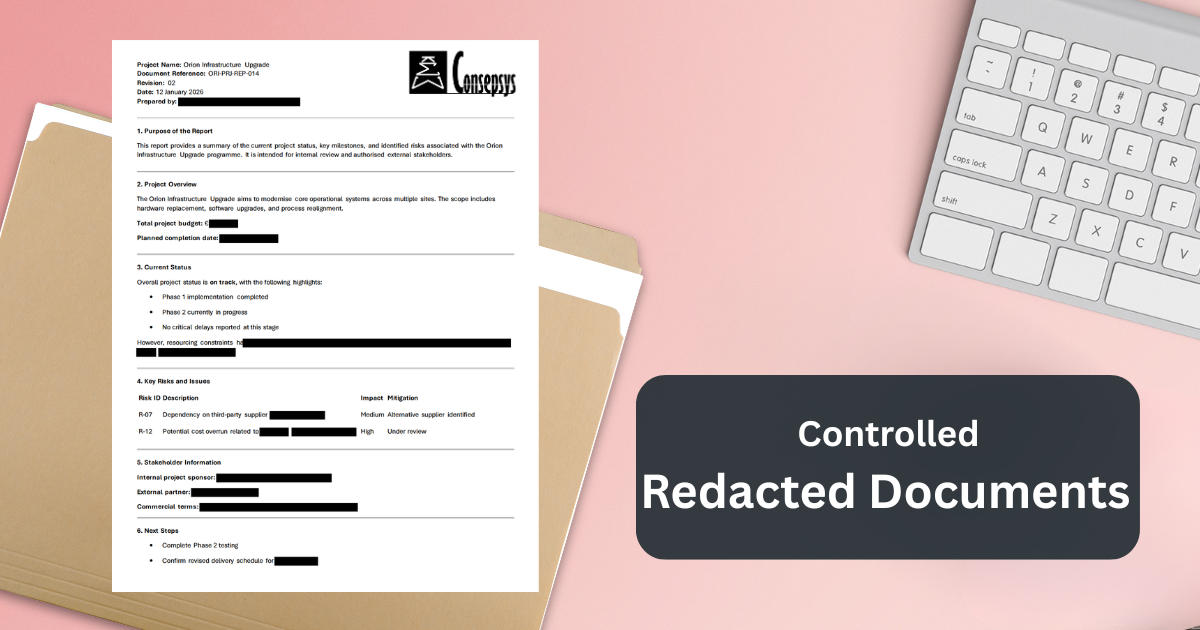
A redacted document is a controlled copy of an original record in which sensitive information has been permanently removed or obscured to prevent unauthorised disclosure. In Document Control, redaction is used to protect personal data, confidential information, and regulated content while maintaining traceability and compliance.
Best Practices · 26. September 2024
Here are 10 key signs that an organisation is not paying enough attention to Document Control (DC):
1. Exclusion from key meetings
A major red flag is when Document Controllers are not invited to important meetings (for example, project and progress meetings, kick-off meetings, etc). This suggests that management does not fully understand the value of Document Control or how integral it is to the organisation's success, leading to serious mistakes down the line.
Best Practices · 26. September 2024
Document Control teams are often under-resourced, grappling with a high volume of tasks despite limited personnel and budgets.
This constraint forces them to be innovative in their approach to managing documents and maintaining compliance. However, sacrificing quality, compliance or traceability should never be an option when looking at reducing manhours spent on Document Control tasks.
One of the options we have is leveraging automation tools. By finding clever ways to optimise their pr
Best Practices · 26. September 2024
In any business, entity or project, both strategy and tactics play crucial roles in achieving success. Though often used interchangeably, the two terms represent distinct concepts, and understanding their differences can greatly enhance your approach to problem-solving.